


When it comes to heart and vascular care, many patients are confused by the terms angiogram vs angioplasty. These are two distinct yet related procedures used in diagnosing and treating cardiovascular conditions, particularly coronary artery disease (CAD). In simple terms, an angiogram is a diagnostic procedure that uses x-ray imaging and contrast agent to visualize blood vessels, especially the coronary arteries. In contrast, angioplasty is a treatment procedure that restores restricted blood flow in blocked arteries, often with the help of a balloon or stent. This article will answer the common search query “what is angiogram vs angioplasty”, clarify how they differ in purpose and execution, and guide you through what to expect from both. We’ll also touch on the less-searched but equally important angle of angioplasty vs angiogram, explaining when one follows the other and how they play key roles in modern cardiac catheterization procedures.
What Is the Difference Between an Angiogram and Angioplasty?
Knowing the difference between an angiogram and an angioplasty is critical for patients facing potential heart or vascular interventions. While they often occur in the same catheterization laboratory, they serve very different roles in cardiac care.
Overview of Angiogram
An angiogram, often referred to as a coronary angiogram when focused on the heart, is a minimally invasive procedure used to evaluate the health of your blood vessels. It is performed in a heart catheterization lab by inserting a flexible tube, or catheter, typically through the femoral artery in the groin or radial artery in the wrist. Once inside, a contrast material is injected to highlight the arterial plaque buildup or stenosis (narrowing of the arteries) on an x-ray imaging system. This angiographic procedure can help detect conditions like atherosclerosis, peripheral arterial disease (PAD), and pulmonary embolism. Sometimes, intravascular imaging tools are used to get more precise readings inside the vessels.
Angiograms are essential components of advanced cardiac testing and often precede interventions like angioplasty or coronary artery bypass grafting (CABG). They may be used following a stress test, doppler ultrasound, coronary CT angiogram (CCTA), or magnetic resonance angiogram (MRA) if further detail is needed.
Overview of Angioplasty
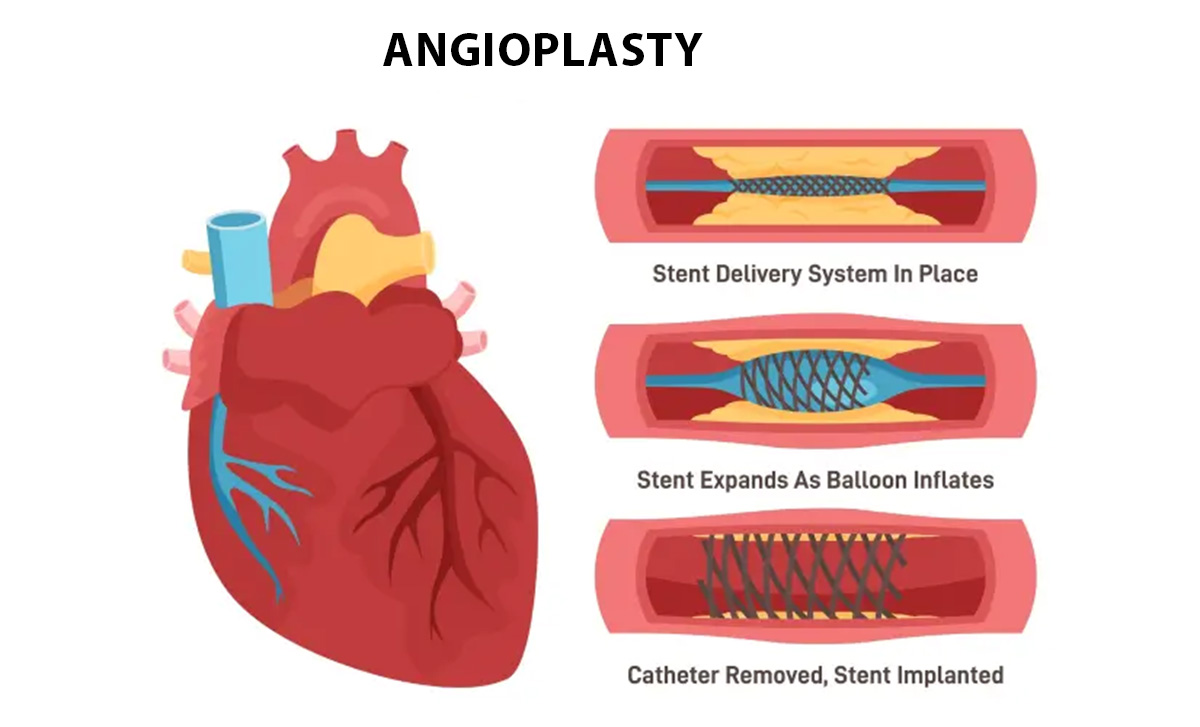
An angioplasty, formally called percutaneous transluminal angioplasty, is a treatment procedure that is commonly used to address narrowed or blocked arteries. It’s a cornerstone of percutaneous coronary intervention (PCI) and is often used in patients with coronary artery disease (CAD). This minimally invasive procedure involves guiding a balloon catheter to the site of blockage using a guidewire. Once the balloon is in place, it is inflated to compress plaque and widen the artery. In many cases, a stent—either bare-metal or drug-eluting—is inserted to keep the artery open. These balloons or stents are critical tools in preventing restenosis (re-narrowing of the artery).
Angioplasty is performed under sedation and sometimes with general anaesthetic. It’s considered safer and less traumatic than open surgery, with a faster recovery time. However, in rare cases, failed angioplasty, coronary artery damage, or false aneurysm can occur.
Angiogram vs Angioplasty: Purpose, Procedure, and Outcomes
While both procedures involve cardiac catheterization, they serve very different roles in heart health. This section breaks down the core differences in purpose, procedure, and expected outcomes.
Diagnostic vs Therapeutic Use
When comparing angiogram vs angioplasty, one of the most important distinctions lies in their core purpose: diagnosis versus treatment. While both are essential tools in modern cardiovascular care, they serve very different roles in managing heart and vascular conditions. Knowing whether a procedure is meant to identify a problem or actively resolve it helps patients feel more informed and confident in their care pathway.
- Angiogram: This is strictly a diagnostic procedure. It’s used to identify the location and severity of blockages in arteries. It is often recommended if patients have abnormal heart rhythms, unexplained chest pain, or failed results on other non-invasive tests like a CT scan or stress test.
- Angioplasty: This is a therapeutic procedure designed to treat the actual blockage. It addresses restricted blood flow due to atherosclerosis and aims to restore adequate circulation to the heart and other organs.
Step-by-Step Breakdown of Each Procedure
Knowing what to expect during a medical procedure can ease anxiety and help patients prepare both mentally and physically. This section provides a detailed, step-by-step guide to how angiograms and angioplasties are performed in the catheterization laboratory. From cardiac catheterization setup to post-procedure monitoring, understanding each stage offers valuable insight into the process.
Angiogram:
- Patient is brought to the catheterization laboratory and given sedation.
- A flexible tube is inserted into the artery via the groin or wrist.
- A contrast agent is injected to visualize blood vessels using x-rays.
- Images are reviewed to detect stenosis, plaque buildup, or abnormalities.
- Patient is monitored in the recovery area for bruising, soreness, or rare complications like radiation exposure or vasculitis.
Angioplasty:
- After the diagnostic angiogram, a balloon catheter is guided to the blockage.
- The balloon is inflated to flatten plaque and reopen the artery.
- A stent is placed to prevent the artery from collapsing or closing.
- The tools are withdrawn, and the site is bandaged.
- Patients are observed for abnormal heart rhythms, bleeding, or rare complications like pacemaker interference or coronary artery damage.
Recovery Times and Aftercare
Recovery doesn’t end when the procedure is over—it’s a crucial phase that supports long-term success and heart health. Whether you’re undergoing an angiogram or angioplasty, knowing how to manage aftercare, recognize potential side effects, and follow medical advice is essential. This section explains the typical recovery timelines, post-procedure restrictions, and ongoing care recommendations for both treatments.
- Angiogram: Patients can typically go home the same day. Heavy lifting should be avoided for a few days. Minor bruising and soreness at the catheter site are common. Blood tests may be conducted to monitor for complications.
- Angioplasty: Recovery involves monitoring in the hospital, with some patients staying overnight. Blood thinners and cholesterol-lowering drugs are often prescribed to maintain stent patency and prevent clotting. Lifestyle advice, including diet, exercise, and open communication with your care team, becomes essential for long-term success.
Coronary Angiogram vs Angioplasty: When Are They Needed?

In patients with suspected or diagnosed coronary artery disease (CAD), both coronary angiogram and angioplasty may be considered. Knowing their timing and necessity is vital. These procedures are often linked in the diagnosis and treatment of restricted blood flow caused by atherosclerosis. Knowing when each is appropriate helps ensure timely intervention and better outcomes in managing heart disease.
Identifying Blockages in Coronary Arteries
A coronary angiogram is often the first step in diagnosing CAD. This angiographic procedure maps out the coronary arteries and identifies where arterial plaque buildup is restricting blood flow. It’s typically done when symptoms like chest pain, fatigue, or abnormal heart rhythms occur, or when other imaging like CCTA, doppler ultrasound, or MRI suggests possible issues. The angiogram helps your care team determine whether further intervention, such as angioplasty or CABG, is needed. It is also useful in evaluating the severity and extent of the disease, which guides the choice between medical management and surgical options.
Treating Coronary Narrowing with Angioplasty
Once blockages are confirmed, angioplasty becomes the next step in treatment. Coronary angioplasty, performed via PCI, can immediately open narrowed arteries using a balloon or stent. It’s often recommended to prevent heart attacks and may be an alternative to coronary artery bypass grafting (CABG) in less severe cases.
Angioplasty combined with stenting is a highly effective option for treating isolated coronary artery blockages. In cases involving one or two affected vessels, its success rates are often comparable to those seen with coronary artery bypass grafting (CABG). Moreover, because angioplasty is a minimally invasive procedure, it typically results in fewer complications and a faster recovery than open-heart surgery. In many instances, placing a drug-eluting stent during angioplasty helps prevent restenosis. The procedure is particularly effective in patients with one or two blocked vessels and is frequently done on the same day as the diagnostic angiogram.
Do You Need an Angiogram Before an Angioplasty?
This is one of the most commonly asked questions when patients are referred to a cardiac catheterization unit. Patients are often concerned about undergoing multiple procedures, but combining both into one session can be more efficient and safer. Knowing how cardiologists make this decision is crucial to planning your care.
Diagnostic Pathways in Cardiac Care
In nearly all cases, angioplasty is only performed after a diagnostic coronary angiogram. It helps define a precise treatment strategy. Sometimes, non-invasive tests like coronary CT angiogram (CCTA) or stress test precede this step, but angiography is considered the gold standard for visualizing blood flow. The angiogram allows for accurate measurement of stenosis and real-time decision-making in the catheterization laboratory. This ensures that unnecessary interventions are avoided, and only clinically significant blockages are treated.
Combined Procedures: Same-Day Angiogram and Angioplasty
In urgent or well-planned cases, the diagnostic angiogram and treatment angioplasty are performed in one session. This streamlines care, minimizes radiation exposure, and reduces hospitalization time. However, this depends on the patient’s anatomy, findings, and the care team’s assessment of clinical trials and best practices. Same-day treatment is especially beneficial in patients with high-risk blockages or unstable symptoms where immediate percutaneous coronary intervention (PCI) is life-saving. It also reduces the emotional and physical burden of undergoing two separate procedures.
What Patients Ask: Common Questions About Angiogram vs Angioplasty
When facing cardiovascular procedures, many patients have similar questions. Here’s what you should know about angioplasty vs angiogram. Addressing these concerns helps patients feel more confident and informed about their care. Knowing the goals, risks, and outcomes of each procedure is a vital part of shared decision-making with your healthcare provider.
Does Angioplasty Always Involve a Stent?
No. While stents are common in percutaneous coronary intervention (PCI), they’re not always necessary. Some blockages respond well to balloon dilation alone, especially if the stenosis is minimal or in a small vessel. Balloon-only angioplasty may be considered in younger patients or in vessels where stenting is anatomically challenging. However, most cardiologists favor stenting to reduce the chance of artery re-narrowing, particularly in high-risk patients or those with diabetes.
Can an Angiogram Clear Heart Blockages?
No. An angiogram is purely diagnostic. It visualizes blockages using x-rays and contrast material, but it does not treat them. Instead, it provides a detailed map for planning intervention or surgical procedures. Treatment typically involves percutaneous transluminal angioplasty, CABG, or a medical therapy regimen involving cholesterol-lowering drugs and lifestyle modifications.
Which Is More Serious?
Both procedures are relatively safe but carry different risks. An angiogram has minimal risks but still involves catheterization, sedation, and potential radiation exposure. Angioplasty is more complex, with risks like failed angioplasty, bleeding, or false aneurysm. However, these risks are rare when the procedure is performed in a heart catheterization lab by experienced specialists. The seriousness often depends on the patient’s overall health, existing conditions like neurofibromatosis or vasculitis, and how urgently the procedure is needed.
Why Choose Timely Medical for Angiograms and Angioplasty?
At Timely Medical Alternatives, patients have access to fast, high-quality cardiac care without the long waits typical of the public healthcare system. Whether you’re seeking a coronary angiogram, angioplasty, or exploring less invasive solutions, Timely Medical provides direct access to leading specialists and modern facilities with a focus on timely diagnosis and treatment. With a reputation for excellence and a personalized approach to patient care, they offer a trusted alternative for those looking to avoid delays in procedures that can be critical to heart health. Ready to take the next step in your cardiovascular care journey? Contact Us today to learn more or to speak with a care coordinator about your options.
Timely Access Without Referral Wait Times
We understand that time is heart muscle. That’s why we offer immediate access to testing and treatment — no wait lists, no referral delays. Whether you’re booked for a coronary angiogram or angioplasty, we prioritize your needs. Rapid access not only relieves anxiety but also improves outcomes by addressing cardiac events before they escalate.
Experienced Specialists and Advanced Facilities
Our catheterization laboratories are equipped with state-of-the-art imaging, and our team includes interventional cardiologists with thousands of procedures under their belts. We use advanced tools for intravascular imaging, balloon catheters, and stenting to ensure optimal results. Our facilities are designed to meet the highest safety and sterility standards. We also participate in clinical trials to stay at the forefront of innovation in cardiovascular care.
Personalized Care in a Private, Supportive Environment
We don’t just perform procedures — we provide comprehensive cardiovascular care. From initial consultation to the recovery area, we offer open communication, privacy, and support. Our post-op services include lifestyle coaching, medication management with anticoagulant medications, and coordinated follow-up with your general physician. Our goal is to make every patient feel seen, heard, and fully supported throughout their treatment journey.
Alternatives to Angiogram and Angioplasty
While angiogram vs angioplasty remains central in heart care, not all patients need them. For many individuals, especially those with mild symptoms or lower cardiovascular risk, non-invasive or medical-first approaches can provide effective monitoring and management before considering more invasive procedures like cardiac surgery. Choosing the right strategy depends on multiple factors including age, symptoms, existing health conditions, and test results.
Non-Invasive Cardiac Imaging Options
Alternatives like CT scan, coronary CT angiogram (CCTA), MRI, and magnetic resonance angiogram (MRA) can help evaluate heart health without invasive procedures. These tests are useful for low-risk patients, those with contraindications for catheter-based testing, or as part of advanced cardiac testing.
Over the past several decades, breakthroughs in medical imaging have significantly advanced the field of interventional radiology. Angiography plays a central role by using injected contrast material and a series of x-rays to visualize blood flow and the inner walls of blood vessels, offering detailed anatomical insights without the need for open surgery. They are also valuable tools for screening atherosclerosis, monitoring heart valve function, and detecting subtle signs of restricted blood flow. In some cases, they are used in combination with a stress test to improve diagnostic accuracy and reduce unnecessary interventions.
Lifestyle and Medication-First Approaches
In early stages of CAD or PAD, doctors may recommend managing cholesterol levels, improving diet, and using cholesterol-lowering drugs and blood thinners. These lifestyle strategies may prevent or delay the need for intervention. Incorporating regular exercise, quitting smoking, and reducing stress are also essential elements of a non-invasive treatment plan. Many patients respond well to medical therapy alone, especially when treatment is initiated early and monitored closely through routine follow-ups and non-invasive imaging.
Conclusion
Knowing angiogram vs angioplasty helps demystify your heart care journey. One identifies the issue, while the other solves it — often in the same sitting. Whether you’re facing coronary angiogram vs angioplasty, seeking second opinions, or exploring alternatives, being informed empowers you to make the best decisions for your heart.
FAQs
Which is better, angioplasty or angiography?
It depends on your condition. Angiography helps diagnose, while angioplasty treats. One is not “better” than the other — they work in tandem.
Can angioplasty clear blockage?
Yes. Angioplasty can clear blocked arteries using a balloon and often a stent to restore blood flow and prevent future obstruction.
Is an angiogram done before angioplasty?
Almost always. The angiogram provides the visual roadmap needed for effective and safe angioplasty.
